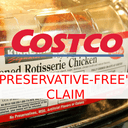
Costco
Costco Rotisserie Chicken Lawsuit: Alleged Preservatives in Kirkland
The lawsuit accuses Costco of advertising its rotisserie chicken as having no preservatives despite sodium phosphate and carrageenan. Follow the case.

- Potential payment
- Up to $12
Subject to eligibility and claim terms.
- Claim deadline
- TBD
- Proof requirement
- TBD
Eligibility
Who may qualify?
Check the covered dates, products, locations, and other official terms before you file.
- Did you purchase Kirkland Signature Seasoned Rotisserie Chicken from Costco
- Did you make these purchases in the United States?
- Were your purchases made during the period when Costco advertised the product as having “no preservatives” (prior to the removal of that language around late January 2026)?
- Did you rely, in whole or in part, on Costco’s “no preservatives” representations on in‑store signage or online when deciding to purchase?
Case overview
What is the Costco case about?
A newly filed proposed class action takes aim at Costco's popular Kirkland Signature Seasoned Rotisserie Chicken, alleging the retailer's 'no preservatives' claim doesn't hold up. According to the complaint, the chicken actually contains sodium phosphate and carrageenan, ingredients the lawsuit says function as preservatives by extending shelf life and preserving texture, despite not necessarily fitting a narrow legal definition of the term.
The suit claims Costco displayed the 'no preservatives' message prominently both in stores and online, shaping consumer expectations that the product was free of any preservative-like additives. Plaintiffs argue that had they known about these ingredients, they either would have skipped the purchase entirely or paid less for the chicken.
Legally, the complaint raises claims under Washington's Consumer Protection Act, along with California's Consumers Legal Remedies Act, Unfair Competition Law, and False Advertising Law. It seeks both monetary damages and a court order halting the 'no preservatives' marketing, on behalf of a proposed nationwide class of buyers as well as a California-specific subclass.
Case details
- Company
- Costco Wholesale Corp. (Costco)
Questions people ask
Frequently asked questions
How much is the Costco case payout?
The listed potential payment is Up to $12. Final amounts depend on the number of valid claims and the administrator's terms.
Who qualifies for the Costco case?
Key eligibility criteria include: Did you purchase Kirkland Signature Seasoned Rotisserie Chicken from Costco; Did you make these purchases in the United States?; Were your purchases made during the period when Costco advertised the product as having “no preservatives” (prior to the removal of that language around late January 2026)?; Did you rely, in whole or in part, on Costco’s “no preservatives” representations on in‑store signage or online when deciding to purchase?. Always confirm the full class definition with the official source before filing.
Is the Costco case open for claims?
Not yet. No claim process is currently open. TapClaim monitors official updates to this case.
Settlement administrator and official sources
- Listing verificationLast checked Sep 26, 2026


